Introduction
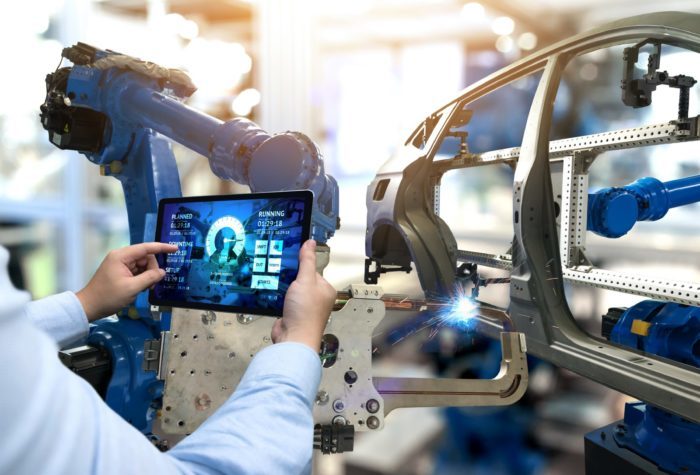
The manufacturing industry is experiencing one of the biggest technological transformations in history. Traditional production methods are being replaced by intelligent systems that use Artificial Intelligence (AI), the Internet of Things (IoT), cloud computing, robotics, automation, and data analytics to improve efficiency and productivity. This evolution is known as Smart Manufacturing, and it is redefining how products are designed, produced, monitored, and delivered.
In 2026, manufacturers face increasing pressure to reduce production costs, improve product quality, shorten delivery times, and meet growing customer expectations. Smart manufacturing provides the tools and technologies needed to overcome these challenges while creating more flexible, efficient, and sustainable production environments.
Unlike conventional manufacturing, smart factories rely on connected machines and real-time data to automate processes and make informed decisions. Sensors, AI-powered systems, and cloud platforms work together to monitor equipment, predict maintenance needs, optimize production schedules, and improve overall operational performance.
Businesses looking to modernize their manufacturing operations often invest in Custom Software Development Services to build intelligent manufacturing systems, integrate production equipment, automate workflows, and create scalable digital solutions tailored to their operational requirements.
What Is Smart Manufacturing?
Smart manufacturing refers to the use of advanced digital technologies to improve manufacturing processes through automation, real-time monitoring, and intelligent decision-making.
Instead of relying heavily on manual operations, smart manufacturing connects machines, software, sensors, and employees into one integrated ecosystem.
Key technologies include:
- Artificial Intelligence (AI)
- Internet of Things (IoT)
- Cloud Computing
- Industrial Robotics
- Machine Learning
- Big Data Analytics
- Digital Twins
- Automation Systems
These technologies allow manufacturers to collect and analyze real-time data, helping them improve productivity, reduce waste, and enhance product quality.
Why Smart Manufacturing Matters in 2026
Global competition and changing customer expectations require manufacturers to become more agile and efficient. Companies that adopt smart manufacturing technologies can respond more quickly to market demands while improving operational performance.
The major advantages include:
- Higher production efficiency
- Lower operational costs
- Reduced equipment downtime
- Improved product quality
- Faster decision-making
- Better customer satisfaction
- Increased workplace safety
- Sustainable manufacturing practices
Manufacturers that embrace digital transformation are better positioned to compete in an increasingly technology-driven marketplace.
Key Technologies Driving Smart Manufacturing
1. Artificial Intelligence (AI)
Artificial Intelligence has become the foundation of modern smart factories.
AI helps manufacturers:
- Predict equipment failures
- Improve quality control
- Optimize production schedules
- Automate inspections
- Forecast customer demand
- Reduce production waste
Machine learning algorithms continuously analyze production data and recommend improvements that increase efficiency and reduce costs.
2. Industrial Internet of Things (IIoT)
The Industrial Internet of Things connects manufacturing equipment through sensors and communication networks.
IIoT allows businesses to monitor:
- Machine performance
- Equipment health
- Energy consumption
- Production efficiency
- Inventory levels
- Environmental conditions
Real-time monitoring enables manufacturers to identify problems before they become major disruptions.
3. Industrial Automation
Automation continues to replace repetitive manual tasks with intelligent machines and robotic systems.
Benefits include:
- Faster production
- Improved consistency
- Reduced human error
- Increased workplace safety
- Higher production capacity
Automation also allows employees to focus on more strategic and value-added activities.
4. Robotics in Manufacturing
Modern robots perform complex manufacturing tasks with exceptional precision and speed.
Industrial robots are commonly used for:
- Assembly
- Packaging
- Welding
- Painting
- Material handling
- Product inspection
Collaborative robots (Cobots) work safely alongside employees, increasing productivity without replacing human expertise.
5. Cloud Computing
Cloud technology enables manufacturers to store, manage, and analyze large volumes of production data from multiple facilities.
Cloud platforms provide:
- Remote monitoring
- Real-time collaboration
- Secure data storage
- Easy scalability
- Faster software updates
Cloud-based manufacturing systems improve communication across departments and production sites.
6. Big Data Analytics
Manufacturing generates enormous amounts of operational data every day.
Big data analytics helps organizations:
- Improve production planning
- Monitor machine performance
- Reduce downtime
- Predict maintenance
- Optimize supply chains
- Improve customer satisfaction
Data-driven decision-making allows manufacturers to operate more efficiently and respond quickly to changing business conditions.
7. Digital Twins
A digital twin is a virtual representation of a physical machine, production line, or manufacturing facility.
Manufacturers use digital twins to:
- Simulate production processes
- Test design improvements
- Predict equipment failures
- Optimize factory layouts
- Reduce production risks
Digital twin technology enables businesses to make informed decisions without disrupting actual production.
8. Predictive Maintenance: Reducing Downtime and Costs
One of the biggest advantages of smart manufacturing is predictive maintenance. Traditional maintenance methods often involve either repairing equipment after it fails or servicing machines on a fixed schedule. Both approaches can be expensive and inefficient.
Predictive maintenance uses Artificial Intelligence (AI), IoT sensors, and real-time analytics to monitor the health of machines continuously. These systems analyze temperature, vibration, pressure, and other operational data to identify early signs of equipment failure.
The benefits of predictive maintenance include:
- Reduced machine downtime
- Lower maintenance costs
- Longer equipment lifespan
- Increased production efficiency
- Improved worker safety
- Better resource planning
Instead of waiting for machinery to fail unexpectedly, manufacturers can schedule maintenance at the right time, minimizing disruptions and improving productivity.
9. Smart Supply Chain Management
A smart factory is only as efficient as its supply chain. Modern manufacturing depends on fast, accurate, and transparent supply chain operations.
Smart manufacturing integrates production systems with suppliers, warehouses, logistics providers, and distributors to create connected supply chains.
Benefits include:
- Real-time inventory tracking
- Automated procurement
- Faster order fulfillment
- Better demand forecasting
- Reduced inventory costs
- Improved supplier collaboration
With AI-powered analytics, manufacturers can identify potential disruptions, optimize inventory levels, and improve delivery performance.
10. Sustainable Manufacturing
Environmental sustainability has become a major priority for manufacturers worldwide. Smart manufacturing helps businesses reduce waste, conserve energy, and minimize environmental impact without compromising productivity.
Examples of sustainable manufacturing practices include:
- Energy-efficient production systems
- Smart power management
- Waste reduction through automation
- Digital monitoring of emissions
- Optimized raw material usage
- Recycling and resource management
These initiatives not only support environmental goals but also reduce operating costs and improve corporate reputation.
11. AI and Cloud Integration in Manufacturing
Artificial Intelligence and cloud computing are transforming the way manufacturers operate. AI analyzes production data, while cloud platforms provide secure storage, scalability, and remote access.
Together, they enable:
- Real-time production monitoring
- Automated quality control
- Intelligent production planning
- Remote factory management
- Predictive analytics
- Business intelligence dashboards
Organizations adopting AI & Cloud Solutions can create connected manufacturing environments where machines, employees, and business systems work together seamlessly. AI-powered cloud platforms improve operational visibility, automate workflows, and support faster decision-making while enabling manufacturers to scale their operations efficiently.
12. Cybersecurity in Smart Manufacturing
As factories become more connected, cybersecurity becomes increasingly important. Connected machines, cloud platforms, and IoT devices create new opportunities for cyber threats if they are not properly protected.
Manufacturers should implement:
- Multi-factor authentication
- Network segmentation
- Secure API integrations
- Data encryption
- Regular security audits
- Employee cybersecurity training
Strong cybersecurity protects production systems, intellectual property, and sensitive operational data from cyberattacks.
13. Challenges of Smart Manufacturing
Although smart manufacturing offers significant advantages, businesses may face several challenges during implementation.
High Initial Investment
Modern technologies require investment in hardware, software, infrastructure, and employee training.
Integration with Legacy Systems
Many manufacturers still use older equipment that may require upgrades or custom integration before connecting with modern digital systems.
Skills Gap
Employees need training to work with AI, robotics, IoT, cloud platforms, and advanced analytics.
Data Management
Smart factories generate enormous amounts of data that must be stored, analyzed, and secured effectively.
Cybersecurity Risks
Connected production environments require continuous monitoring to protect against cyber threats.
Proper planning and digital transformation strategies help organizations overcome these challenges successfully.
Future Trends in Smart Manufacturing
The future of manufacturing will continue to evolve with emerging technologies.
Important trends include:
- AI-powered autonomous factories
- Digital twins for entire production facilities
- 5G-enabled industrial communication
- Edge computing
- Collaborative robots (Cobots)
- Blockchain for supply chain transparency
- Sustainable and green manufacturing
- Fully connected smart factories
- Advanced predictive analytics
- Hyperautomation across manufacturing operations
Businesses that adopt these innovations early will gain a competitive advantage by improving efficiency, reducing costs, and delivering higher-quality products.
Frequently Asked Questions (FAQs)
1. What is smart manufacturing?
Smart manufacturing is the use of digital technologies such as AI, IoT, automation, cloud computing, and data analytics to improve manufacturing efficiency, productivity, and decision-making.
2. How does AI improve manufacturing?
AI helps predict equipment failures, automate quality inspections, optimize production schedules, analyze operational data, and improve overall manufacturing efficiency.
3. What are the benefits of smart manufacturing?
Key benefits include increased productivity, reduced downtime, lower operational costs, improved product quality, better safety, enhanced sustainability, and faster decision-making.
4. Why is cloud computing important in manufacturing?
Cloud computing provides secure data storage, remote monitoring, scalability, collaboration, and real-time access to production information across multiple facilities.
5. Is smart manufacturing suitable for small businesses?
Yes. Small and medium-sized manufacturers can adopt smart technologies gradually, starting with automation, cloud-based systems, and data analytics to improve efficiency and support business growth.
Conclusion
Smart manufacturing is shaping the future of industrial production by combining automation, Artificial Intelligence, cloud computing, IoT, robotics, and advanced analytics into a connected and intelligent ecosystem. These technologies enable manufacturers to improve efficiency, reduce operational costs, enhance product quality, and respond quickly to changing market demands.
The transition from traditional factories to smart manufacturing environments is no longer a long-term vision—it is becoming a business necessity. Organizations that embrace digital transformation today are better equipped to handle increasing competition, optimize resources, and deliver superior customer value.
However, successful implementation requires more than simply adopting new technologies. Businesses must invest in the right digital infrastructure, integrate systems effectively, train employees, and prioritize cybersecurity to ensure long-term success.
As innovations such as autonomous factories, digital twins, predictive maintenance, and AI-driven decision-making continue to advance, smart manufacturing will play an even greater role in improving industrial productivity and sustainability.
Manufacturers that invest in intelligent technologies today will be well-positioned to build resilient, scalable, and future-ready operations capable of thriving in the rapidly evolving digital economy.